Audit course. Potentially applicable:
- What are the key perspectives of problem solving activities in the development stage process?
- How to use experimentation as a core activity of problem solving?
- How to utilize open innovation and the TRIZ method
- What needs to be considered for the diffusion and adoption of an innovative product or service?

Audit. Lead product teams and organizations to deliver winning solutions for customers while driving engagement and innovation across the enterprise
Having a clear long-term vision is crucial for any organization to guide decision-making, but translating that vision into business goals, metrics, and product roadmaps requires a well-thought-out strategy that balances and aligns four key pillars: performance measurement and goal setting, team structures and empowerment, rewards and incentives, and corporate culture. This course will take Chief Product Officers and their direct reports into how they can close the gap between long term vision and big ideas and unleashing product design that delights customers and stakeholders.
Precision engineering theory, heuristics, and applications pertaining to the design of systems ranging from consumer products to machine tools. Topics covered include: economics, project management, and design philosophy; principles of accuracy, repeatability, and resolution; error budgeting; sensors; sensor mounting; systems design; bearings; actuators and transmissions; system integration driven by functional requirements, and operating physics. Emphasis on developing creative designs, which are optimized by analytical techniques applied via spreadsheets. Helping to develop solutions.
Subject studies how and why machines work, how they are conceived, how they are developed (drawn), and how they are utilized. Students learn from the hands-on experiences of taking things apart mentally and physically, drawing (sketching, 3D CAD) what they envision and observe, taking occasional field trips, and completing an individual term project (concept, creation, and presentation). Emphasis on understanding the physics and history of machines.
Audit. Explore how people build businesses by moving ideas/products from lab to market. A systematic approach to technology businesses. How to align business and operating models. How to evaluate products/ideas for readiness and market fit. How to position them. How to generate new use scenarios by matching customer needs.
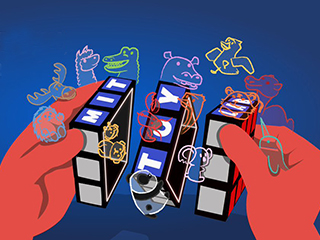
An introduction to the product design process. It is a project-centric class to design and prototype new toys. Design topics include: brainstorming; estimation; sketching; graphic design; drawing and marker rendering; sketch modeling; concept development; design aesthetics; & written, visual, & verbal communication.
Project-based introduction to the engineering of synthetic biological systems. Develop projects that are responsive to real-world problems of their choosing.
Design, build test. Science as a take-apart, engineering as a rebuild. Decide what's worth doing. Projects then ideas feedback. Abstraction in action: systems to devices & devices to parts. Hypothesis-driven engineering. Re-design.
To prosper, firms must develop major product & service innovations. Research into innovation processes has made it possible to develop "breakthroughs" systematically. Several practical concept development methods, such as the "Lead User Method," where manufacturers learn from innovative customers. Case studies show the "art" required to implement a concept development method/methodology. Several practical idea generation development methods.
This course immerses students in the process of building and testing their own digital and board games in order to better understand how we learn from games. We explore the design and use of games in the classroom in addition to research and development issues associated with computer–based (desktop and handheld) and non–computer–based media. In developing their own games, students examine what and how people learn from them (including field testing of products), as well as how games can be implemented in educational settings.